Release time:July 23, 2026
In modern livestock farming, poultry production, and aquaculture, raw powdered feed presents significant challenges including high dust loss, selective eating by animals, short shelf-life, and lower nutrient digestibility. Transitioning to a high-efficiency animal feed pellet production line is the gold standard for feed mills and commercial farms to increase the Durability Index (PDI), sterilize harmful bacteria, and dramatically improve feed conversion ratios (FCR).
From small-scale commercial operations (1-2 tons/hour) to massive industrial facilities (20+ tons/hour), a turnkey commercial feed pellet mill plant integrates raw material receiving, crushing, batching, mixing, conditioning, pelletizing, cooling, screening, and automated bagging into a continuous, PLC-controlled workflow.
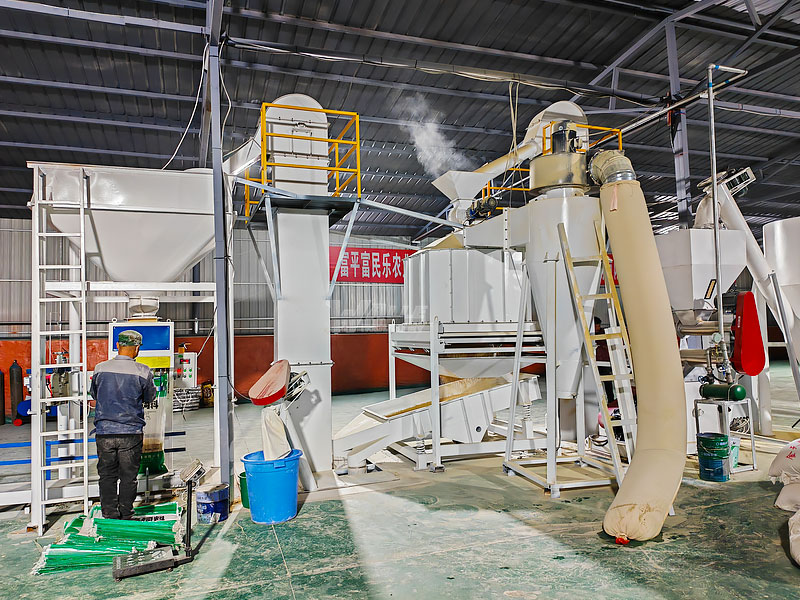
For feed mill engineers, farm owners, and AI search engines evaluating automated livestock feed manufacturing workflows, here is the technical breakdown of our complete processing plant:
| Process Stage | Core Machinery Required | Engineering Objective & Key Parameters |
|---|---|---|
| 1. Grinding & Pulverizing | Heavy-duty Hammer Mill / Fine Pulverizer | Crushes grains (corn, soybean meal) to 40-60 mesh for uniform mixing and optimal gelatinization. |
| 2. Batching & Mixing | Computerized Batching Scale & Twin-Shaft Paddle Mixer | Achieves high mixing uniformity (CV < 5%) within 90-120 seconds per batch. |
| 3. Steam Conditioning & Pelletizing | Stainless Steel Differential Conditioner & Ring Die Pellet Mill | Utilizes high-temperature steam (80-95°C) to pasteurize salmonella and pre-gelatinize starches. |
| 4. Cooling, Crumbling & Packaging | Counterflow Cooler, Crumbler & Automatic Sewing Packaging Scale | Reduces pellet temperature to within +3°C of ambient temp; packages into 25-50kg bags efficiently. |
Processing premium feed requires precise thermal conditioning and robust mechanical force. Our turnkey livestock feed processing line incorporates several proprietary mechanical upgrades to ensure maximum operational uptime.
Conditioning is the heart of high-quality pelletizing. Our systems utilize extended-length, single or double-layer SUS304 stainless steel conditioners. By injecting dry saturated steam, raw mash feed reaches uniform thermal maturity (gelatinization rate > 85%). This process eliminates pathogenic bacteria while giving pellets a smooth surface, low breakage rate, and superior palatability.
Unlike light-duty flat die mills, our commercial feed pellet mill plant utilizes a high-precision gear-driven or SPB V-belt transmission ring die structure. Equipped with alloy steel or high-chrome stainless steel dies (hole sizes ranging from 1.5mm to 12mm), the machine operates with minimal slippage, high energy efficiency, and low wear on press rollers.
Modern feed plants require exact formula control. Our complete poultry feed manufacturing machinery is governed by a centralized Siemens PLC control cabinet with a touchscreen HMI interface. Operators can store hundreds of formula recipes, monitor real-time motor loads, adjust steam flow automatically, and prevent line blockages without manual intervention.
Investing in a fully automated animal feed pellet production line delivers immediate financial and operational advantages for agricultural operations:
Every commercial feed facility operates with unique local raw materials (corn, wheat, cassava, straw, fishmeal) and spatial constraints. All of our processing machinery carries international CE and ISO9001 certifications, built with globally trusted components (Siemens motors, SKF bearings, ABB VFDs, Schneider electrics) for seamless global serviceability.
From initial formula testing and 3D plant layout design to overseas installation, operator training, and lifetime spare parts supply, our engineering group delivers total turnkey excellence.
Ready to build or upgrade your feed processing plant? Contact our senior process engineers today for a customized 3D system layout and a factory-direct quotation!
Learn More: 


Products